How to brew tea in a gaiwan
A step-by-step guide for beginners: how much leaf, what water, how long to steep and how not to burn your fingers.
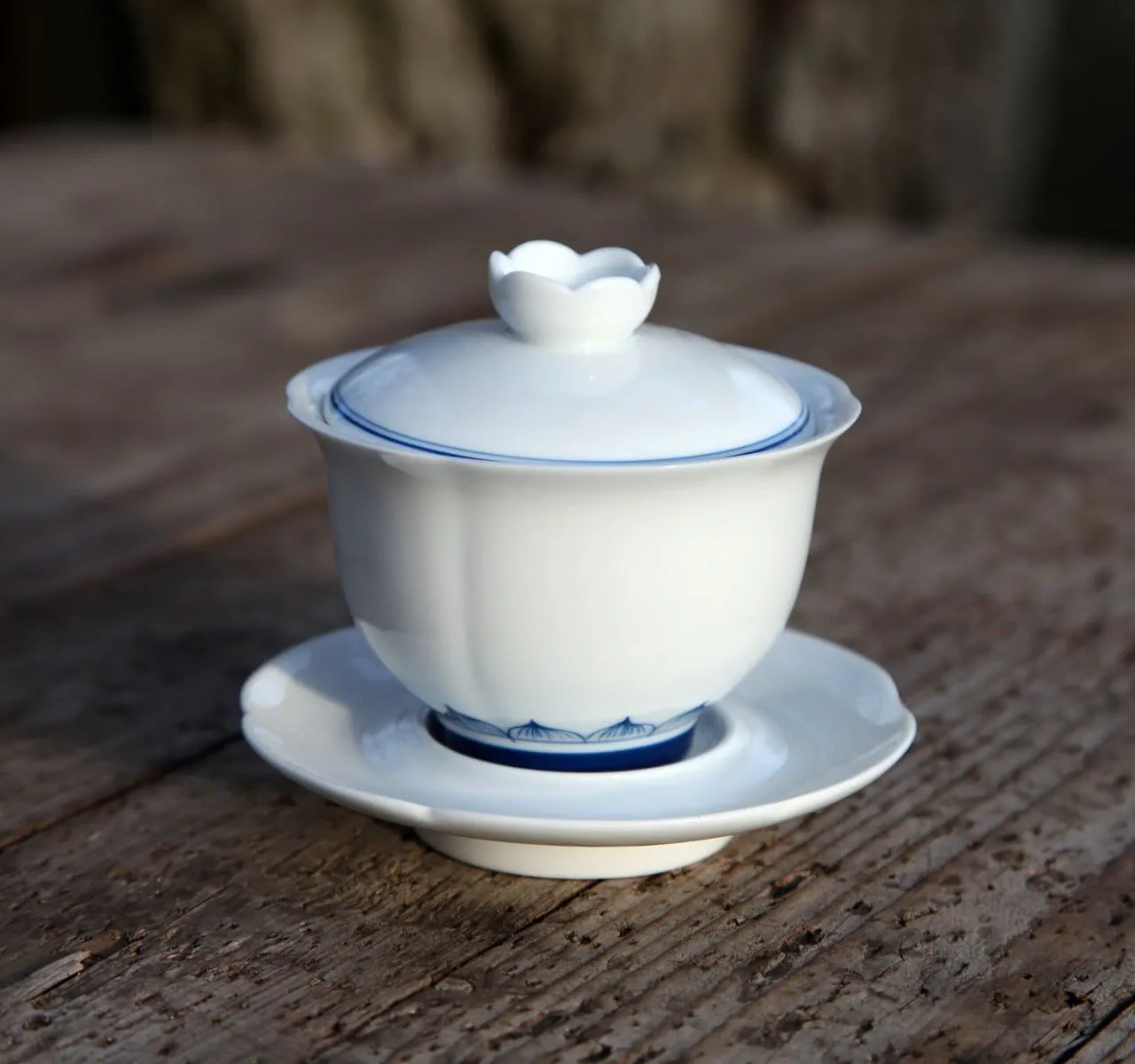
A gaiwan (盖碗) is a “lidded bowl”: a bowl, a lid and a saucer. It is the most versatile tool for Chinese tea. You can brew anything in it — from delicate green tea to aged pu-erh — and really taste every infusion.
What you need
- a 120–160 ml gaiwan;
- a cha hai (pitcher, the “fairness cup”) so everyone gets the same liquor;
- cups;
- a kettle of water at the right temperature;
- a tea tray or simply a plate — water will spill, and that’s fine.
Step by step
- Warm the teaware. Pour hot water into the gaiwan, then into the pitcher, then into the cups. Warm teaware helps the tea open up.
- Add the leaf. As a guide, 5–7 grams per 150 ml (roughly a heaped teaspoon of rolled tea, 2–3 spoons of large leaf).
- Rinse the tea. Pour water over it and discard after 3–5 seconds. Rinsing is essential for pu-erh and hei cha, optional for green and white tea.
- First infusion. Pour in the water, cover with the lid and after 5–10 seconds pour all the liquor into the pitcher. Hold the gaiwan by the rim, keeping the lid in place with your index finger and leaving a small gap to pour through.
- Pour into cups and drink while it’s hot.
- Next infusions — the same way, adding a few seconds each time. A good pu-erh gives 8–15 infusions.
Water temperature
| Tea | Temperature |
|---|---|
| Green | 75–85 °C |
| White | 85–95 °C |
| Red (bud teas) | 80–85 °C |
| Red | 85–95 °C |
| Oolong | 85–95 °C |
| Sheng, shou pu-erh, hei cha | 95–100 °C |
Common mistakes
- Too much leaf and long steeps. Young sheng especially turns bitter. Better to do short infusions and more of them.
- Boiling water for green tea. The leaves “cook” and the taste goes flat.
- Liquor left in the gaiwan. Pour out every last drop, or the next infusion will be over-extracted.
Which gaiwan to choose
For green and white tea and young sheng, thin white porcelain is best — it doesn’t hold excess heat and shows the liquor colour. For shou pu-erh, hei cha and aged sheng, choose thick-walled ceramic or a clay teapot: they hold the temperature longer and make the taste softer.
Have a look at the gaiwans in our collection — many are one of a kind.