Sheng vs shou pu-erh: what’s the difference
Two pu-erhs from the same leaf, yet completely different in taste and character. A simple guide: processing, taste, ageing and how to choose your first pu-erh.
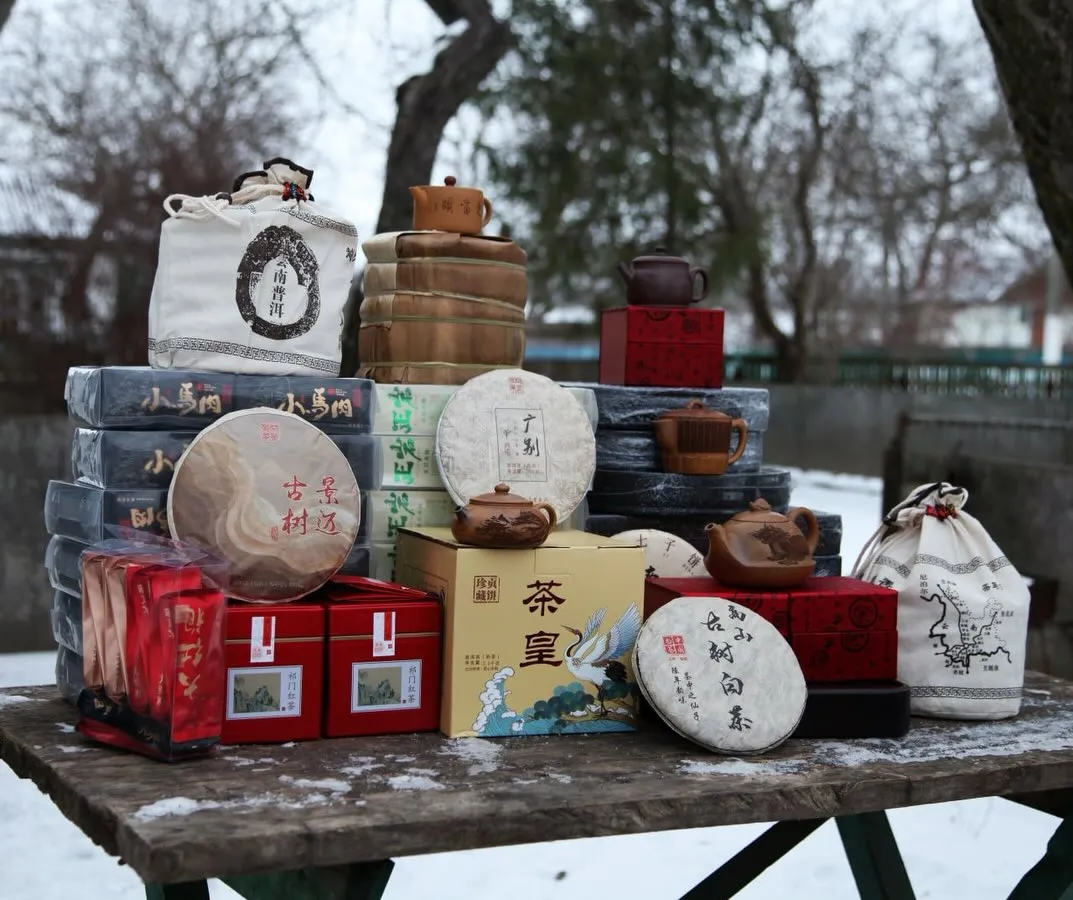
Pu-erh is tea from Yunnan province in south-west China. It is made from the leaves of the large-leaf Assam camellia (Camellia sinensis var. assamica), and the trees grow in the mountains at 1,000–2,000 metres. Many of the trees our tea comes from are 80–300 years old.
There are two kinds of pu-erh: sheng (“raw”) and shou (“ripe”). The leaf is the same; the processing is different.
Sheng pu-erh — “raw”
The leaves are withered, pan-fired in a wok, rolled and sun-dried. The result is mao cha — “rough tea”, which is then pressed into cakes (usually 357 grams).
Then the interesting part begins: sheng lives and changes for years. Young sheng is fresh, floral and honeyed, sometimes noticeably bitter and astringent. After 10–15 years of proper storage it becomes soft, deep and sweet, with woody and fruity notes.
In China they say “yi shan yi wei” — every mountain has its own taste. For sheng this is especially true.
Shou pu-erh — “ripe”
The method was invented in the 1970s. The tea is piled into large heaps, moistened and covered, and accelerated “wo dui” fermentation (渥堆) begins. In 45–60 days the tea goes through changes that would take sheng decades.
Good shou is dark, velvety and warming: wood, dried fruit, nuts, cocoa, creamy sweetness. There should be no “cellar”, fishy or musty earthy notes in good shou — they are a sign of poor leaf or poor fermentation.
At a glance
| Sheng pu-erh | Shou pu-erh | |
|---|---|---|
| Liquor colour | golden to amber | dark red to almost black |
| Taste | flowers, honey, fruit, bitterness | wood, dried fruit, nuts, cocoa |
| Effect | energising, refreshing | warming, calming |
| Ageing | changes over decades | changes more gently, but also “matures” |
| Brewing | 90–100 °C, less leaf | 95–100 °C, can be stronger |
Where to start
If you’re new to pu-erh, start with a good shou. It forgives brewing mistakes and almost everyone likes it from the first cup. Try, for example, the mellow Zhong Dao 2019 or the classic Bao Lan Chun 2018.
If you want to feel a “living” pu-erh, take a balanced medium-aged sheng such as Qi Zi Bing 2019. And when you’re ready for bright discoveries, try young sheng from specific villages: Na Ka, Xiao Hu Sai, Bang Dong.
Best of all, come to a tasting in Kharkiv and try different pu-erhs side by side.